
BY JOANNE SASVARI
There is a perfume called Shumukh, which is made with rare ingredients like Indian agarwood, sandalwood, musk and Turkish rose, and bottled in pearl-and-diamond-crusted gold. It sells for $1.29 million — that’s U.S. dollars, so around a gazillion in Canadian — making it the world’s costliest fragrance.
Yet it is nowhere near as magical as petrichor. And that is something we can enjoy for free.
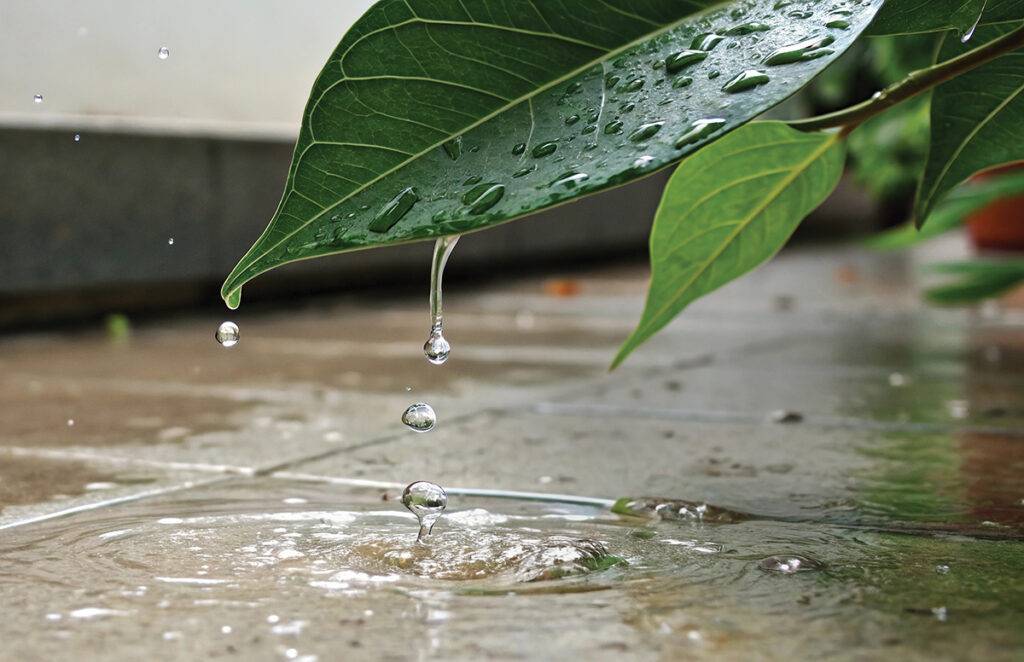
Petrichor is the earthy aroma we smell when a light rain hits dry soil. It is the fresh, clean aroma of growth and renewal, the delicate scent of hope, the promise of change for the better.
Although it’s been around as long as rain has, the word was only coined in 1964 — it comes from the Ancient Greek “pétra,” meaning rock, and “ikhor,” the ethereal fluid believed to be the blood of the gods — and its source was only isolated in 2015, by a team of scientists at the Massachusetts Institute of Technology.
Like any good fragrance, which is a mix of accords and top, middle and base notes, petrichor is a complicated chemical composition. It is a combination of volatile plant oils and geosmin, a chemical compound produced by various bacteria and fungi, which is released as an aerosol when rain hits dry ground. Sometimes there’s ozone in the mix, too. Just remember that you won’t detect petrichor in a heavy rain or after a long period of rain.
Many perfumers have tried to capture this evocative fragrance in a bottle. Think: Marc Jacobs Rain, Guerlain Après l’Ondée (“after the shower”) or Demeter Petrichor. But the best way to enjoy it is simply to open your door, step outside, breathe deeply and revel in the perfume of well-being.
Image: Adobe Stock


