
Conductor Christian Kluxen has made the symphony a hot ticket. But better support for the arts would be music to his ears.
By David Lennam
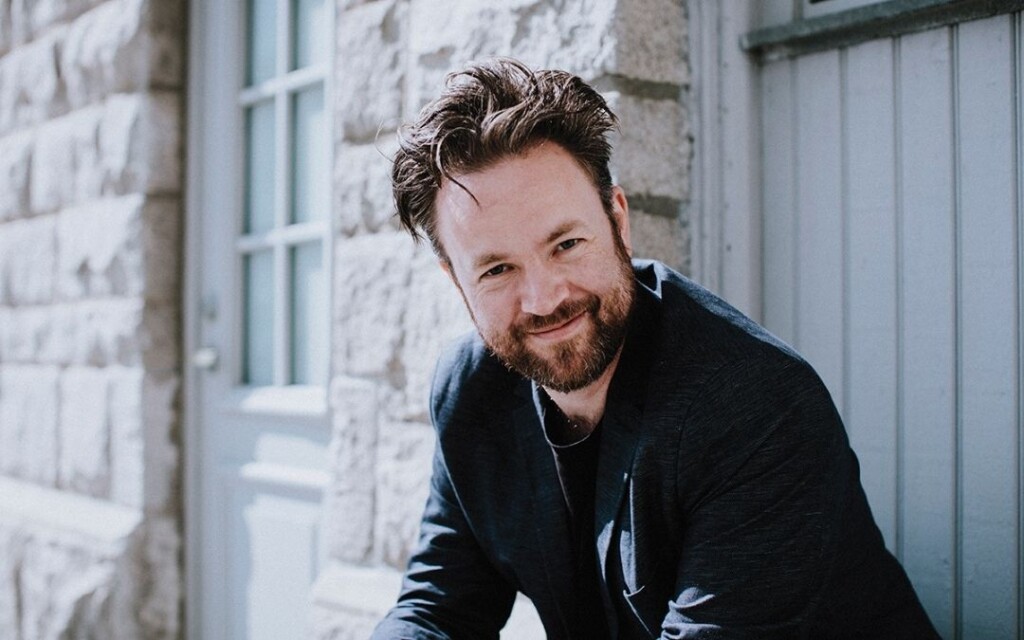
There’s a sense of urgency in Christian Kluxen’s voice.
It gets a bit louder and there’s something very conductorly about it. This is punctuated with some flourishing arm gestures. Also conductorly.
The music director of the Victoria Symphony since 2017 wants to talk about how we (the city, audiences, philanthropists, benefactors, music lovers) need to make the arts a priority and support the symphony. Because if we do not, he cautions, there may not be a professional orchestra to call our own.
“In the season brochure I always thank our community and praise them, but to be honest I’d like to tell them to step up,” implores Kluxen. “You may put this very clearly in this interview,” he tells me, “because this has to happen. If it doesn’t happen you won’t have a symphony in 10 years. Because all the musicians will be leaving.”
Sitting down for some live Brahms or Mozart, allegro, crescendo, the subtlety of genius, all may seem as it always was. But the Victoria Symphony is a costly proposition, despite surprisingly low pay for the musicians. It’s tough to recruit and retain in an expensive city, particularly when an orchestra feels orphaned. There’s no permanent rehearsal hall, so practice sessions move from school gyms to church halls. Concerts might be at the Royal, maybe the Farquhar. Both are pricey rentals with no guarantee they’ll be available.
This said, Kluxen’s influence has resulted in an impressive uptick in attendance — more than 52,000 attendees last season (including 21 sellouts), a 46-per-cent increase from the year before.
“I feel I’m embarking into a new level now with this job,” he beams. “We’ve reached a point where there’s a lot of new, engaged musicians who are fantastic. Now is the time where this community has to really take responsibility.”
Half Circus Clown
Kluxen has certainly kept up his end of the bargain. During his tenure (and presumably for the next three years of his recent contract extension), the 43-year-old Dane challenges his musicians to be exciting.
“He’s the best conductor we’ve ever had,” says Kenji Fusé. He should know. The principal viola for the past 31 years has bowed strings in front of four previous conductors — Peter McCoppin, Kees Bakels, Timothy Vernon and Tania Miller.
Amidst a conversation about philosophy and music and the fact the mercurial maestro is a domestic guy who would just as soon be at home in Copenhagen with his wife and infant daughter, he intentionally creates an edge, just as he does when he conducts.
“My job is half being an archeologist and half being a circus clown,” Kluxen says. “The archeologist is the person who sits at his desk hour after hour after hour looking at old shit, trying to understand why it was made like it was, understanding the context. Lonely, introvert, boring. The other part is completely extrovert. Crazy standing in front of 80 people who all look at you and are expecting you to communicate and be inspiring. There are very few jobs with this division between the two extremes.”
“He has the enthusiasm of a child, discipline of a boxer. He’s strong willed and he cares a lot what other people think, but it doesn’t alter what he does. It doesn’t affect him. ”
Kenji Fusé on Christian Kluxen
The 10th music director in the Vic Symphony’s 84-year history, Kluxen is earning his frequent-flyer points. A much sought-after guest conductor around the globe, for concerts and operas, he’s also principal guest conductor of the Turku Philharmonic in Finland.
Sometimes described as emotional and a contrarian — and a conductor who always seems to be having the time of his life up there in black, his back to the audience — Kluxen is candid about where his focus lies. Not in career ambitions, though he’s achieved so much, but with a deeper degree of what the late writer/philosopher Robert Pirsig would call quality.
“My compass is, what is the substance of this? What is in my blood is when I go somewhere I am nervous for not fulfilling the intention of Sibelius or Beethoven or the substance of the music,” he says. “Substance, for me, is really the core thing. If people say they like my work, it’s based on the fact that I’m completely obsessive about the core of the music and how I can make [the orchestra] communicate the music better.”
Fusé says Kluxen feels personally responsible for every performance. He’s a technician who is emotionally invested in the orchestra.
“[Musicians] make the mistakes and so many conductors are like, ‘Oh, you made a mistake.’ They want to divorce themselves like they’re not part of it,” Fusé says. “When [Kluxen] messes up a little thing, he beats himself up. He’s driven. He’s got childhood demons he’s still exorcising. He has the enthusiasm of a child, discipline of a boxer. He’s strong willed and he cares a lot what other people think, but it doesn’t alter what he does. It doesn’t affect him. He’s way more intelligent than he lets on.”
An Emotional Journey
Asked if he’d like to have met any of the great composers like Beethoven, Kluxen reveals that he’s happy not to have had the chance. It would compromise his understanding of their music.
“Let’s say I had met Beethoven and I came to the Victoria Symphony and said, ‘Beethoven wanted it this way.’ They would look at me and say, ‘What does that mean?’ Because his esthetics were based in some completely different world. Let’s say I did know what he meant exactly, I’d still have to interpret it into something my musicians understood.”
Kluxen’s approach has been to create a new sense of togetherness amongst his players, so everyone feels listened to. And then expand that out into the audience.
“We have to create a new way of communicating our art. My vision is that we can’t be, ‘Oh, this is another concert with Beethoven, Brahms and some other work.’ We decided we wanted to tell stories. Every concert should be a narrative in some way. It has to take you on an emotional journey.”
He believes this building of trust has started to pay dividends.
“If we do that at every concert, people will start to understand why we are doing this and when they start to understand why we’re doing this they will also start to feel more engaged. That will lead to a place where we can play almost any music that we want as long as we tell the story well,” he says.
“If you read a bedtime story to your child it doesn’t matter if you read the phone book. What matters is it’s you that reads it. I want to create this sense that we could play anything and our audience would still love it because it’s us doing it and we do it well and they trust us.”


